
The future of learning is human.
Hi, I’m Jane Shore, a learning scientist, author, and visualizer.
I help schools, organizations, and leaders rethink how people learn, connect, and contribute through talks, facilitated experiences, collaborative design, and visual thinking.
School of Thought is the home for my work to make People-Based Learning visible, intentional, and more possible wherever we live, work, and gather. I work at the intersection of learning science, storytelling, art, and community, translating research and ideas into forms people can see, feel, and use.
If you’re rethinking how people learn, gather, lead, or measure what matters, let’s connect.
The book, the movement
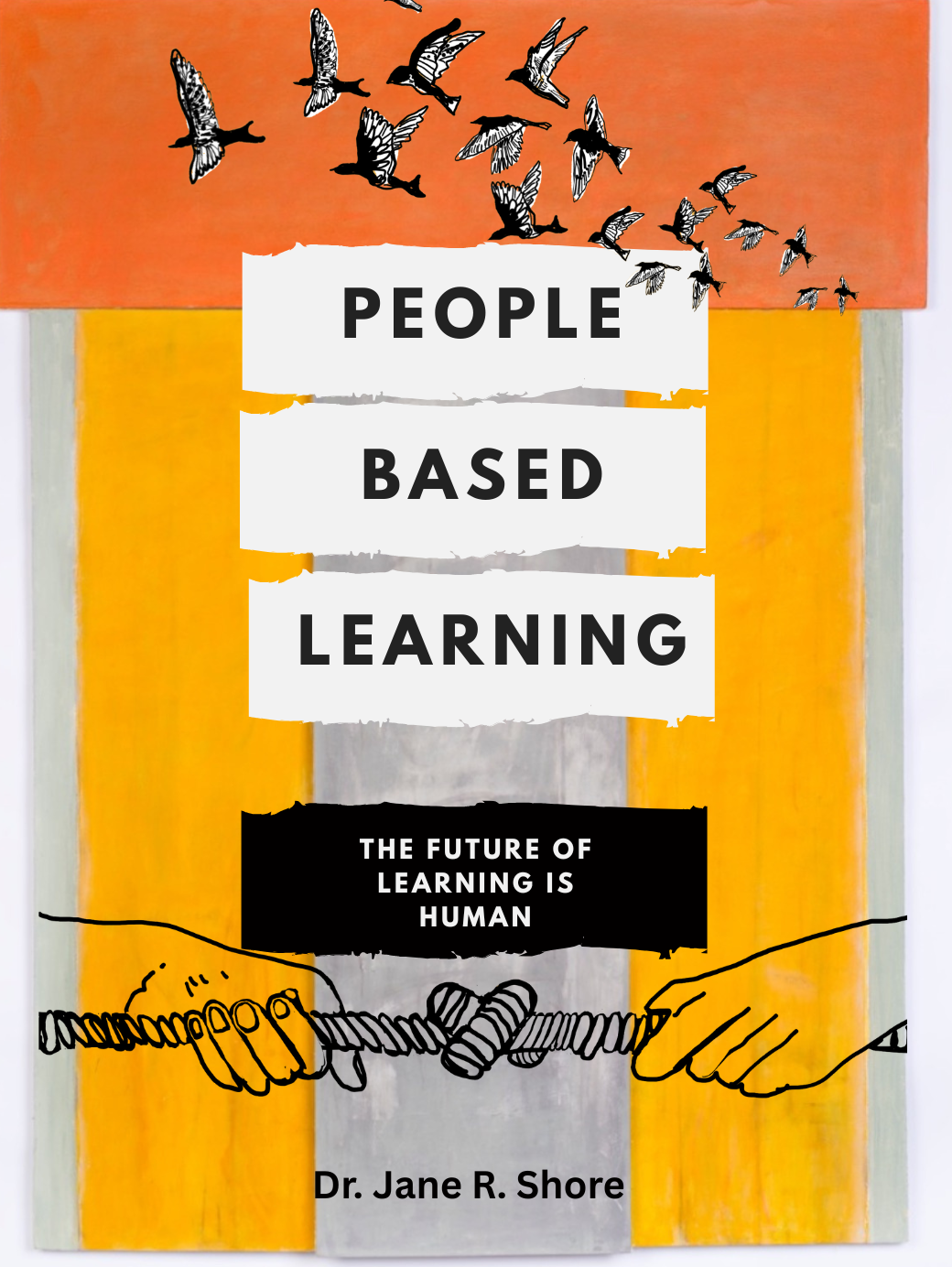
People-Based Learning (Routledge, 2026) brings together the art and science of connection to reshape how we teach, lead and live.
How People-Based Learning Works

Our model weaves together three powerful moves:
Connect. Reflect. Affect.
People-Based Learning is an orientation and a framework for designing learning that engages both hearts and minds and turns understanding into action.
Connect
Connection is where learning begins.
We create the conditions for people to feel seen, safe, and genuinely engaged — whether in a classroom, a workshop, or a boardroom. This means building trust, inviting diverse voices, and designing experiences where relationships are not an afterthought, but the foundation. When people feel connected, they are more curious, more open, and more willing to stretch into new ideas.
Reflect
Reflection turns moments into meaning.
We help learners make sense of their experiences through thoughtful prompts, stories, visuals, and structured dialogue. Reflection deepens understanding, strengthens memory, and makes learning personal. It’s the bridge between “I heard it” and “I get it.” Through reflection, teams build shared language, shared understanding, and shared direction.
Affect
Affect is when learning changes what happens next.
Affect is the emotional spark and the movement that follows. It's the shift in perspective, possibility, or practice that emerges when people learn with and through one another.
We design talks, workshops, and learning experiences that invite more than inspiration. Participants question assumptions, connect ideas to their own contexts, and explore what they might do differently. We build in opportunities to try something new, carry insights into other spaces, and learn from what happens next.
Sometimes that means a teacher redesigns a classroom practice, a leader approaches a decision differently, or a group turns a shared question into collective action.
We don't just design for what happens during an experience. We design for what becomes possible after it.